Different paths, different calculations
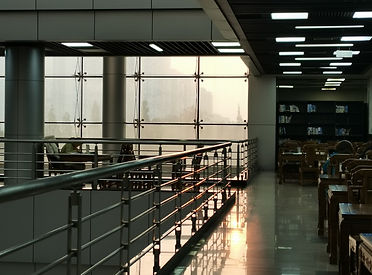
Fu spends nearly six months in the school lirbary to prepare for the exam. During the rest, she likes to record everyday's sunset. (Photo courtesy: Fu Langrui )
Amid a competitive job market, young people weigh the civil service exam against postgraduate studies differently. Some candidates remain committed to the postgraduate path, others, after experiencing the intense competition of the civil service exam, choose to switch directions.


Chen currently prepares for her second graduate school entrance exam coming in this December. (Photo contrvocy to Chen Keyue)
Chen Keyue, a 23-year-old student who is preparing for her second attempt of postgraduate entrance exam in Sichuan province, is one of those who have chosen to persist with further studies.
After failing her first attempt at an accounting master’s program, she remains determined.
“I have academic credentialism and want to improve my academic qualifications,” she said. “The job market is extremely tough for undergraduates to find a job right now, with many positions requiring a master’s degree.”More importantly, she still does not know exactly what she wants to do in the future.
“Pursuing a master degree feels like a buffer zone for me, which delays employment pressure and gives me time to determine my true goals,” she said.
Her parents, both in the public sector, repeatedly encouraged her to consider the civil service exam for its stability. But they also respect her decision to continue with postgraduate studies. “Perhaps after I finish my master’s, I will also be swept into the civil service wave,” Chen added.
Not everyone stays on the postgraduate track from the beginning. Still some candidates have opted to go back to the postgraduate entrance exam after attempting the civil service exam, due to the fierce competition.
Zhang Xirui, a 25-year-old postgraduate student in Shanghai, has participated in numerous exams over the past two years in an attempt to join the civil service sector before deciding to have a master’s degree.
For those two years, Zhang had no job and cut off all contact with the outside world, even her personal hobbies. However, after repeated setbacks, she began to doubt herself if she had set her goal too high. Then, in the last civil service exam Zhang applied for a post in the “Special-Post Teachers Program”, a special policy implemented for rural compulsory education in central and western China, which publicly recruits college graduates to teach in rural schools below the county level for a three-year service period.
According to Zhang, the salary and benefits of the position she applied for are not competitive compared with other positions. If she secured this position, she would be required to commit to the role for a minimum number of years and would not be allowed to transfer or resign freely during that period.
“Can you imagine, twelve people will live together, and the salary is only 2,000 yuan per month (HK$2299),” said Zhang.
Even so, the final applicant-to-position ratio for the position she applied for reached 100:1. Referring to previous years’ written exam scores, Zhang estimated that a score of 85 or higher out of 100 was enough for her to get into the interview stage.
“My thought at the time was, if I could pass the exam, I would go, no matter how bad the conditions were, it would be kind of a return on my two years of investment,” she said.
However, that year, Zhang scored 87. The competition for the written exam was clearly more intense than Zhang had expected, and she did not even enter the interview stage.
“I prepared for a long time, endured so much hardship, and all this for a stable job with such poor conditions?” she said.


Zhang is admitted to the postgraduate program at the University of International Business and Economics in Shanghai last year. (Photo courtesy: Zhang Xirui )
Zhang decided to return to postgraduate entrance exams, driven by academic credentialism.
Regarding the sunk costs of two years, both in terms of time and money, Zhang said, “I was thinking of cutting my losses. Since I already want to do this, the only way to solve the problem is to put it on my agenda as soon as possible, rather than agonizing over which option is better."
Three months of focused preparation yielded satisfactory results, allowing Zhang to successfully enter her desired university for postgraduate studies.
Zhang mentioned that even though she currently dislikes the topic of taking the civil service exam, she wouldn’t say for sure that she’ll never retake it.
“When I was maybe 30 to 35 years old, if at that time, I felt my inner improvement was more complete and wanted to secure a stable job. I might consider retaking the civil service exam,” she said.
Fu Langrui’s experience offers another perspective on switching paths. Instead of taking a postgraduate entrance exam or civil service exam, after taking the civil service exam three times, she decided to give it up and pursue further studies abroad.
In April this year, she received an offer from the Hong Kong University of Science and Technology.
“For most of the time I was preparing for the civil service exam, I received almost no positive feedback,” she said. “The competition was fierce, and the score thresholds were extremely high, even for entry-level positions.”
The prolonged lack of progress and heavy psychological pressure made her realise she was not ready to enter the system straight after graduation. “I spent six months preparing for the first selected cadres exam, and then about two months preparing for the second and third rounds of the national and provincial civil service exams respectively, putting in around eight hours a day,” said Fu.
The intensive preparation also caused her to miss the autumn recruitment season and summer internship opportunities.
“Choosing to study abroad was not merely an escape, but more like a deliberate step for me to regain positive momentum,” said Fu.
“The most important thing for me now is to create a clear point of positive feedback, restore my normal state, and give myself enough time to think clearly about what kind of work I want to do and what kind of life I want to lead, or simply to gain new experiences and information that might bring about change,” Fu said.
Although under the boom of entering the public sector, some young graduates like Chen still choose to pursue postgraduate studies. Others like Zhang and Fu, have abandoned the civil service exam after experiencing its pressure and limited rewards.
All these choices are shaped not only by external employment pressures, but also by each person’s tolerance for uncertainty, desire for stability, and direction of their future self.

Fu participates the provincial civil service exam of Sichuan province on December 7 in 2022. (Photo courtesy to Fu Langrui)