
Stability first: Why China’s graduates are betting on the “iron rice bowl” never before
Reported by WANG Jing
Supervised by WANG Xiangwei
Hong Kong Baptist University
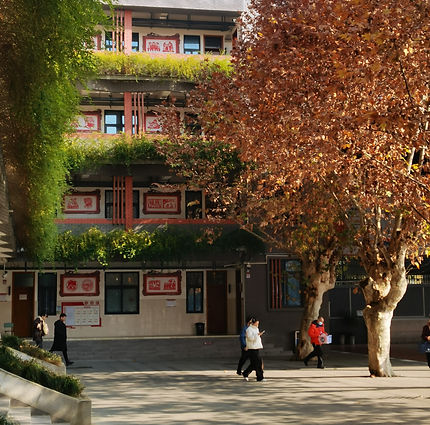
Candidates who takes the Sichuan Provincial Civil Service Examination finishes their exams and leaves the testing site last year. (Photo courtesy: Fu Langrui)
Lin Ziqi, a 23-years-old law student, stepped into the exam hall for her second attempt at the Chinese civil service exam on March 14 this year.
“When I was in year three, I started to think whether to take the postgraduate entrance exam or the civil service exam,” Lin said. “At the time, almost everyone around me, including my roommates and friends, were preparing for the civil service exam. So I decided to have a try.”
The intensity of the first exam she took exceeded Lin’s expectations and the failure dealt her a heavy blow. But she chose to prepare a second attempt amid the attractiveness of securing a stable government job.
Lin is not the only one in China to have chosen this path. More than 3.71 million candidates registered for the 2026 China’s national civil service exam, surging from 1.58 million in 2021, an increase of 235.9%, according to the State Bureau of Civil Servants in China.
Opposite from this growing trend, the number of people who took postgraduate entrance exams fell for three consecutive years, dropping to 3.43 million in 2026, a decrease of more than 1.3 million compared with the 2023 peak of 4.74 million.
This represents the first time in a decade that the number of applicants for postgraduate entrance exams has been overtaken by those for the national civil service exams, which driven by a change in how young people assess risk, according to Alfred Wu Muluan, Associate Professor at the Lee Kuan Yew School of Public Policy at National University of Singapore.
“A civil service post now looks like a safer and more predictable investment than another academic credential,” said Wu.
The hottest position is with the National Immigration Administration, an immigration officer role in Ruili, a city in western Yunnan province, which is a major border crossing between China and Myanmar.
This post has an acceptance-to-apply ratio of 1 to 7,591, according to the Xinhua report.
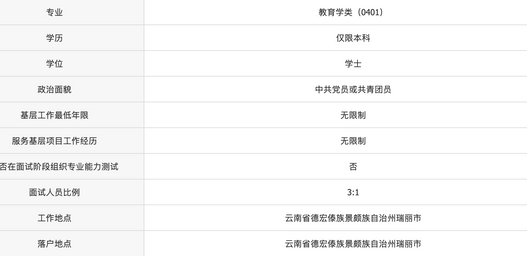
Applicants for this position must be members of the Communist Party of China or the Communist Youth League, but no requirements regarding the minimum length of grassroots work experience or participation in grassroots service projects, according to Huatu Education's database of past job openings.
“Instead of positions that offering better salary and conditions, the most popular roles are simply those with the lenient application requirements”, said Fan Yuanjiang, an eight-year-experienced civil service exam tutor at Wendu Education, one of the largest tutoring institutions in China specialising in preparation for postgraduate and civil service exams.
This upward trend is also mirrored in the civil tutoring classroom.“In around 2020 to 2022, one of our tutoring classrooms had around 80 students seated in. This year, still in the same room, there are more than 300 students,” said Dong Xu, a civil exam tutor in an tutoring institution based in Inner Mongolia autonomous region.
The fever of pursuing a secure job stands in contrast to decades ago. At that time, with China’s economy growing rapidly and opportunities abounding in the private sector, when civil servants often quit their jobs known as “iron rice bowls”, which always refers to jobs in China's public sector, as layoffs are usually rare once you enter the system, to venture into business for more money and job satisfaction.
Now with the economy slowing down, and jobs harder to come by, the “iron rice bowls" have become the safest choices for university graduates, which also spawning a lucrative exam tutoring industry to help the graduates in their exams.